Gardener Leyton: Recycling and Sustainability for an Eco-Friendly Waste Disposal Area
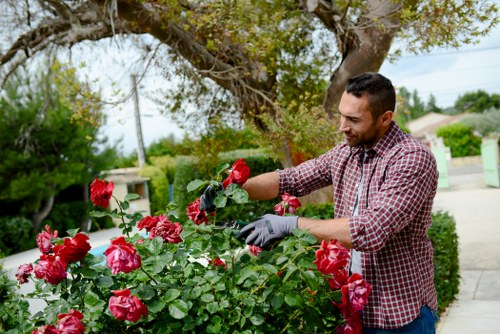 As a local Gardener Leyton service we prioritise an eco-friendly waste disposal area and a practical, sustainable rubbish gardening area on every job. Our approach combines careful on-site separation, small-scale composting and partnerships across the borough to reduce landfill, recover soil nutrients and keep green spaces healthy. Whether you call us Gardening Leyton or a Leyton gardener, our core aim is to make every garden clearance deliver measurable environmental benefit.
We set clear targets for our operations: by 2030 we are targeting a 60% recycling rate across all garden and household waste we handle, with an interim target of 50% by 2026. This recycling percentage target covers green waste, timber, metals, inert material and clean soils collected during clearances. The targets align with local borough strategies that emphasise kerbside separation of food, paper, glass, mixed recycling and garden waste, and we mirror those systems when collecting from private gardens.
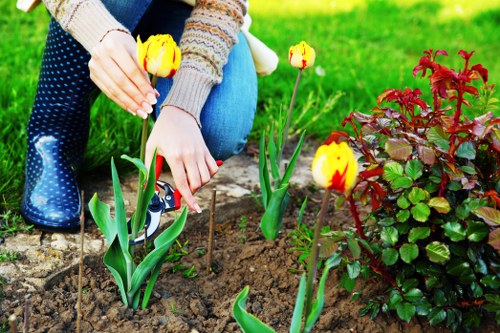 Our on-site practice reflects the boroughs’ approach to waste separation: dry recycling separated from organic garden material, soils and rubble kept distinct for reuse or specialist transfer, and hazardous or chemical wastes isolated for safe disposal. We also work with local transfer stations and materials recovery facilities that serve Waltham Forest and neighbouring boroughs, routing separated fractions to the right destinations rather than to landfill.
Practical Steps: Sustainable Rubbish Gardening Area and Resource Recovery
Every job includes clearly labelled sacks and bins so we create an effective sustainable rubbish gardening area on-site. This reduces contamination of recyclable streams and maximises material recovery. Typical activities include:
- Green waste composting — shredding branches and leaves to make mulch or community compost;
- Timber and wood chipping — diverting clean wood for chipping and reuse;
- Metal and inert sorting — segregating scrap metal and clean masonry for recycling;
- Reusing topsoil where possible and isolating contaminated soils for specialist treatment.
Our sustainable gardening area design also supports reuse: larger, intact plants and paving are offered to community allotments or charities instead of being thrown away. We maintain a register of local reuse options and offer to load items directly for partners that collect usable plants, tools and furniture for redistribution.
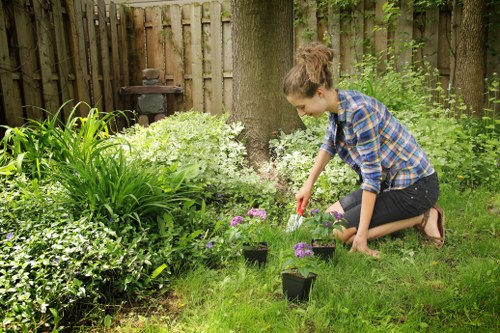 Working at scale across Leyton and nearby neighbourhoods lets us create consistent routines, so homegrown compost, mulch and recycled aggregates are commonly returned to gardens rather than being replaced with new products. That circular approach reduces embodied carbon in landscaping and supports healthier soils.
Local Transfer Stations, Charity Partnerships and Low-Carbon Fleet
We operate with a clear logistics chain: materials are pre-sorted on site, then transported to local transfer stations and materials recovery facilities that support separation and onward recycling. Our network includes transfer facilities serving Waltham Forest and neighbouring boroughs, ensuring garden arisings and other recovered materials are processed appropriately rather than being incinerated or landfilled.
 Partnership working is central to our model. We collaborate with community charities, allotment societies, reuse organisations and environmental groups to ensure usable materials have a second life. Typical partners include local community gardens, charity reuse stores and horticultural programmes that accept plants, soil, tools and reclaimed materials. These collaborations increase local benefit while reducing carbon from new supply chains.
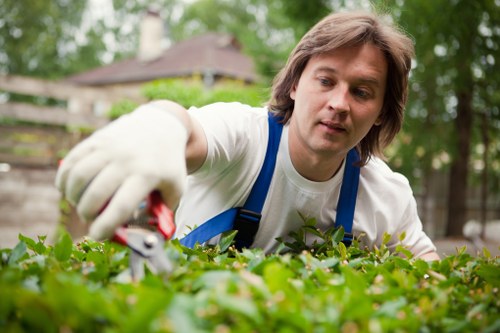 Transport emissions are a key consideration. Our fleet is transitioning to low-carbon vans — electric and plug-in hybrid models — and we use telematics to plan low-emission routes and reduce idling. For tight access or short runs we deploy cargo bikes and trailers where feasible. These measures lower operational emissions and help deliver a genuinely low-carbon gardening and waste disposal service in Leyton.
To track progress we publish an annual sustainability snapshot that reports our recycling percentage performance and material flows. Measures include weight-based reporting for green waste, wood, metal and soil; diversion rates to reuse or recycling; and carbon-reduction metrics for transport and fuel use. Internally we set continuous improvement goals so each season’s clearances have higher recovery rates and less residual waste.
We also run seasonal community days with charity partners and council stalls so surplus soil, bark, bricks and plants find reuse locally. These events reduce disposal costs and help the whole community see the value of a properly managed eco-friendly waste disposal area and a resilient sustainable rubbish gardening area.
In summary, our Leyton gardening services are more than tidy-ups: they are a local contribution to circular resource management. By aligning with borough waste separation schemes, using local transfer stations, partnering with charities for reuse and operating a low-carbon fleet, we turn garden clearances into opportunities for recycling, reuse and climate-friendly practice. If you value a sustainable approach, our Gardener in Leyton methods build greener gardens and cleaner waste streams for the whole neighbourhood.